
Published on Wednesday 11th November 2026
Ramp regulations matter because a poorly designed ramp, or one that has not been properly maintained, can quickly become a safety risk. A ramp that is too steep, too narrow or has inadequate edge protection can increase the risk of slips, trips and falls.
Ramp regulations matter because a poorly designed ramp, or one that has not been properly maintained, can quickly become a safety risk. A ramp that is too steep, too narrow or has inadequate edge protection can increase the risk of slips, trips and falls.
For businesses, getting ramp design right is about more than meeting regulations. It means providing safe, practical access for employees, visitors and anyone using the building.
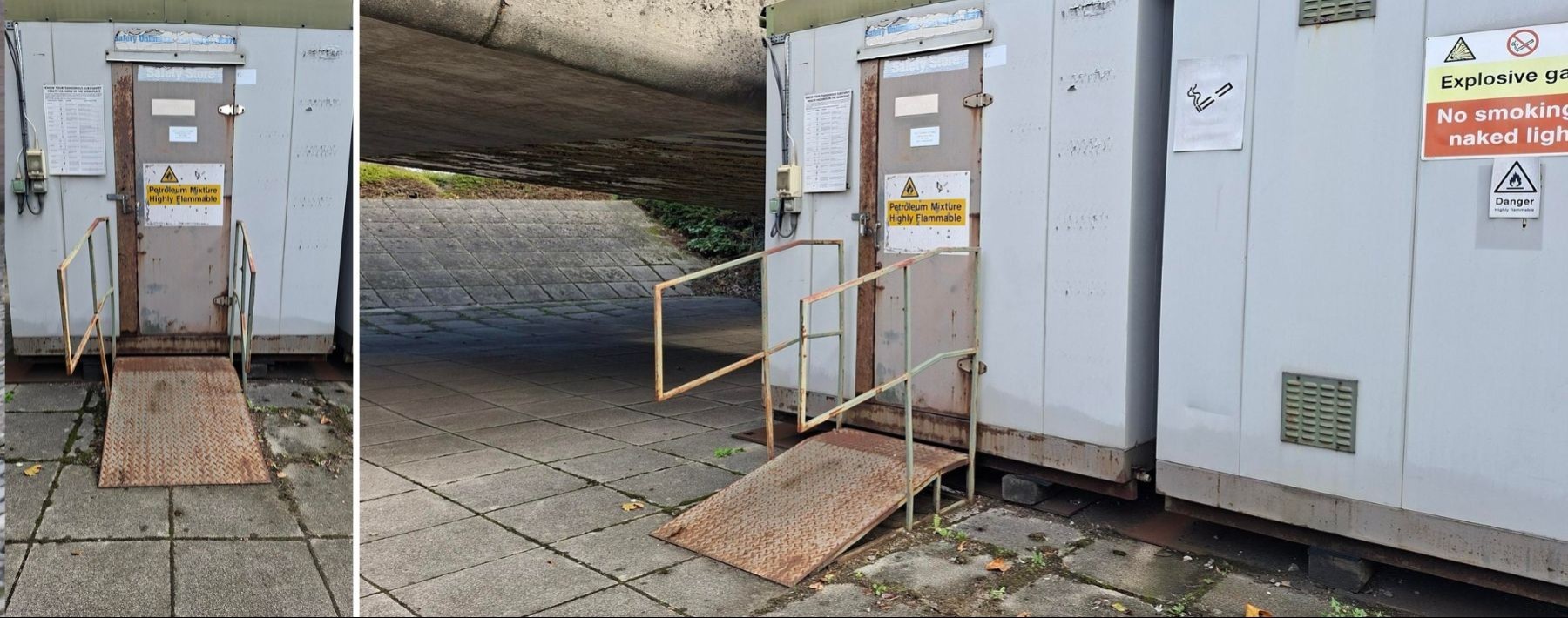
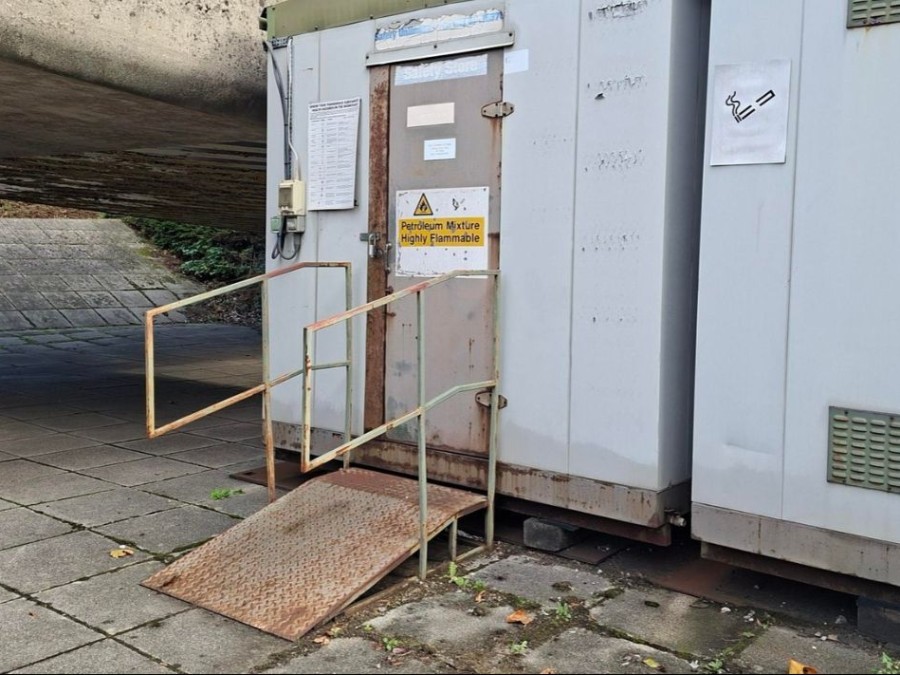
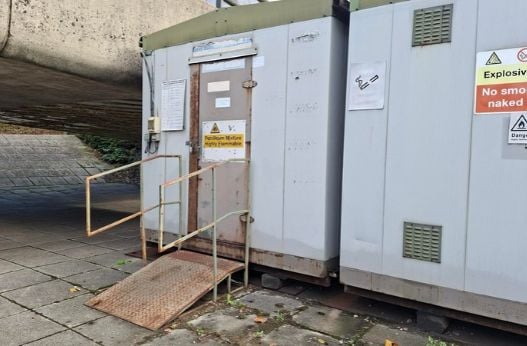
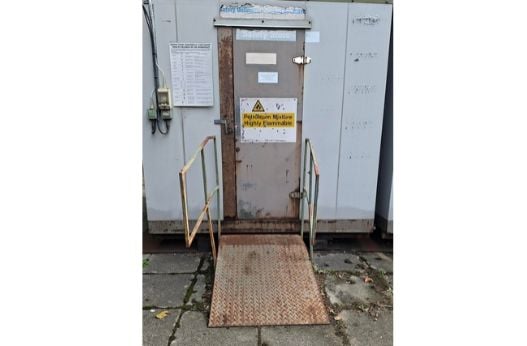
Take the below photo of a metal access ramp outside an industrial chemical store, for example. Its design and condition raise several questions about whether it provides safe and suitable access.
The Main Safety Considerations
A safe ramp needs more than a metal surface and handrails. Its gradient, width, landings, surface and edge protection all need to suit the people using it and the conditions around it.
What's Wrong With The Ramp in the above photo?
The photo above will be used as a reference throughout the following questions.
1. Are the Handrails and Side Protection Properly Designed?
The metal railings along both sides look quite open. Handrails provide support when people use a ramp, but they are not necessarily enough to prevent someone falling over the edge.
Guarding needs to be suitable for the ramp's height and layout. Its strength, height and construction should be checked against the relevant requirements.
2. Is the Required Edge Kerb Provided?
There is no obvious separate raised kerb along the open edges of the ramp in the photo.
Where required, a kerb helps prevent wheelchair wheels, walking aids and other items from slipping off the side. Approved Document K gives guidance on a 100mm-high, visually contrasting kerb in addition to suitable guarding.
A handrail or guardrail does not automatically replace this separate edge protection.
3. Is the Ramp Surface in Suitable Condition?
The ramp in the photo has a raised chequer-plate pattern, but this does not guarantee enough grip in all conditions.
Ramp surfaces need to be slip-resistant, particularly when wet. Water, dirt, oil and other substances can increase the risk of slipping, so the surface must be suitable for its location and use.
The metal should also be checked for corrosion, damage and loose sections.
4. Are the Handrails Secure and Properly Maintained?
Handrails need to be secure enough to support people using them. Rust, loose bolts, damaged joints and weakened fixings can affect their reliability.
Regular inspections and maintenance help identify problems before they become a safety issue.
5. Is the Ramp Gradient Suitable?
A ramp that is too steep can be difficult to use, particularly for wheelchair users and people with limited mobility.
The height difference and horizontal length need to be measured to establish the actual gradient. Approved Document M provides guidance on maximum gradients, with the permitted gradient depending on the length of each ramp flight.
6. Is the Ramp Wide Enough?
A ramp needs enough clear width for the people expected to use it. This is particularly important where wheelchair access is required or people may need to pass one another.
Approved Document M provides guidance on ramp widths for accessible routes. The required width should be considered alongside the available space and intended use.
7. Is There Enough Space at the Top and Bottom of the Ramp?
Landings give people room to stop, turn and manoeuvre safely. They are especially important for wheelchair users and anyone approaching a doorway.
The platform at the top of this ramp appears small, so its dimensions and the space around the entrance should be checked. Landings must meet the relevant guidance and should not be obstructed by doors or other obstacles.
8. What About the Ground Around the Ramp?
The paving around the bottom of the ramp looks worn. Uneven or damaged ground can create an additional trip hazard, particularly where people move between the ramp and the surrounding walkway.
The approach and exit areas should be stable, suitable for safe movement and kept clear of obstructions.
9. Is the Ramp Appropriate for a Chemical Storage Area?
The location of this ramp is also important. It provides access to an industrial chemical store, so site-specific risks should be considered as part of the workplace risk assessment.
For example, if substances could reach the ramp, the surface, cleaning arrangements and maintenance procedures should be suitable for that risk. The access route must also remain clear and safe.
What Do UK Ramp Regulations Actually Cover?
Several regulations and guidance documents are relevant when designing, installing or assessing ramps in the UK:
-
Building Regulations 2010 – Approved Document K: Approved Document K covers protection from falling, collision and impact. It includes guidance on ramps, guarding and handrails. It explains the need for suitable protection where there is a risk of falling and provides guidance on ramp surfaces and edge protection.
-
Building Regulations 2010 – Approved Document M - it covers access to and use of buildings. It includes guidance on accessible ramps, including gradients, widths, landings, handrails and slip resistance. This is particularly important when providing access for disabled people and wheelchair users.
- Workplace (Health, Safety and Welfare) Regulations 1992 -These regulations place duties on employers and those responsible for workplaces. Regulation 12 covers floors and traffic routes. They should be suitable for their purpose and not expose people to risks from uneven or slippery surfaces. Regulation 17 covers the suitability of traffic routes, including safe movement around the workplace.
- HSE Guidance and Workplace Risk Assessments - A workplace risk assessment should consider how the ramp is used, who uses it and what hazards may be present. Inspections and maintenance should also be carried out where needed.
Who Is Responsible If Someone Has an Accident on a Ramp?
Responsibility depends on the circumstances, including who owns, manages or controls the premises and who is responsible for the ramp's design, installation and maintenance.
Employers have duties to protect employees and others who may be affected by their work activities. Those responsible for premises must also consider whether access routes are safe and properly maintained.
If an accident occurs, the ramp's condition, inspection records, risk assessments and maintenance history may all be relevant when establishing what happened.
Why Are Ramp Regulations So Important?
Ramp regulations help reduce accidents and make buildings more accessible.
A ramp that is too steep, has inadequate edge protection or provides insufficient space can create difficulties for many users. These problems can be particularly serious for people with disabilities, older people and anyone carrying equipment or materials.
Getting the design right from the start can also help businesses avoid expensive alterations, repairs and disruption later.
We have an in-house design department and can help you design a modular ramp that meets the requirements of Part M and Part K of the Building Regulations.
Whether you need a new ramp or advice on an existing installation, our team can help develop a practical, safe and compliant design to suit your building and requirements.
How Can You Make Sure an Industrial Ramp Is Safe?
If you are installing a new ramp or checking an existing one, start by assessing the site and how the ramp will be used.
Important checks include:
- Measuring the height and length to establish the gradient.
- Checking the clear width and available turning space.
- Measuring the top, bottom and intermediate landings.
- Inspecting handrails, guarding, kerbs and their fixings.
- Checking that the surface provides suitable slip resistance.
- Looking for corrosion, damage and loose components.
- Assessing the surrounding ground and approach routes.
- Considering site-specific risks, including chemicals or other substances.
Where there is uncertainty, a competent person should assess the ramp and identify any work needed to make it safe and suitable.
If you're looking to purchase a modular ramp, we can arrange a site survey to assess the suitability of the site and verify the measurements provided during your initial enquiry. This helps ensure all dimensions and site requirements are confirmed before proceeding with your order.
Please note: A site survey can only be arranged once you have approved the initial estimate we have provided.

Looking for a Fully Compliant Ramp Solution?
Our fully compliant modular ramp can be configured to suit different heights, widths and site layouts, with hire, supply-only or supply-and-install options. Site surveys and 2D or 3D drawings can also help plan the right solution.


FAQs
What regulations apply to ramps in the UK?
The main guidance includes Approved Documents K and M of the Building Regulations. Workplace ramps may also be covered by the Workplace (Health, Safety and Welfare) Regulations 1992.
What is the maximum permitted ramp gradient?
Approved Document M gives different maximum gradients depending on the length of the ramp flight. Its guidance includes 1:12 for a flight up to 2m, 1:15 for a flight up to 5m and 1:20 for a flight up to 10m.
Do ramps need handrails on both sides?
Approved Document M recommends handrails on both sides of ramps covered by its accessible ramp guidance. The exact requirements depend on the ramp and its use.
Do ramps need a raised kerb?
Where the relevant guidance applies, a 100mm-high, visually contrasting kerb is recommended on open sides, in addition to suitable guarding. A handrail alone does not provide the same protection.
How often should an industrial ramp be inspected?
There is no single inspection interval that suits every ramp. Checks should reflect its condition, how frequently it is used and the risks at the site. Regular inspections and prompt repairs help keep it safe.
THE UK’S EXPERTS IN MODULAR RAMP SYSTEMS.
Rapid Ramp
Riverside Works, Church Ln, Etchingham, TN19 7AS
Hours:
8am - 5pm, Monday to Friday
Products
Services
Projects
Sector
Resources
Calculators


