
Published on Thursday 2nd April 2026
If you’re looking for the cheapest wheelchair ramp, the most affordable options are usually portable ramps (such as suitcase ramps), wooden ramps, or DIY-built solutions. These tend to have the lowest upfront cost and can seem like a quick and simple way to improve access. However, while these options may appear cheaper at first, they often come with limitations that affect safety, durability, and long-term value.
If you’re looking for the cheapest wheelchair ramp, the most affordable options are usually portable ramps (such as suitcase ramps), wooden ramps, or DIY-built solutions. These tend to have the lowest upfront cost and can seem like a quick and simple way to improve access. However, while these options may appear cheaper at first, they often come with limitations that affect safety, durability, and long-term value.
Common Low-Cost Wheelchair Ramp Options
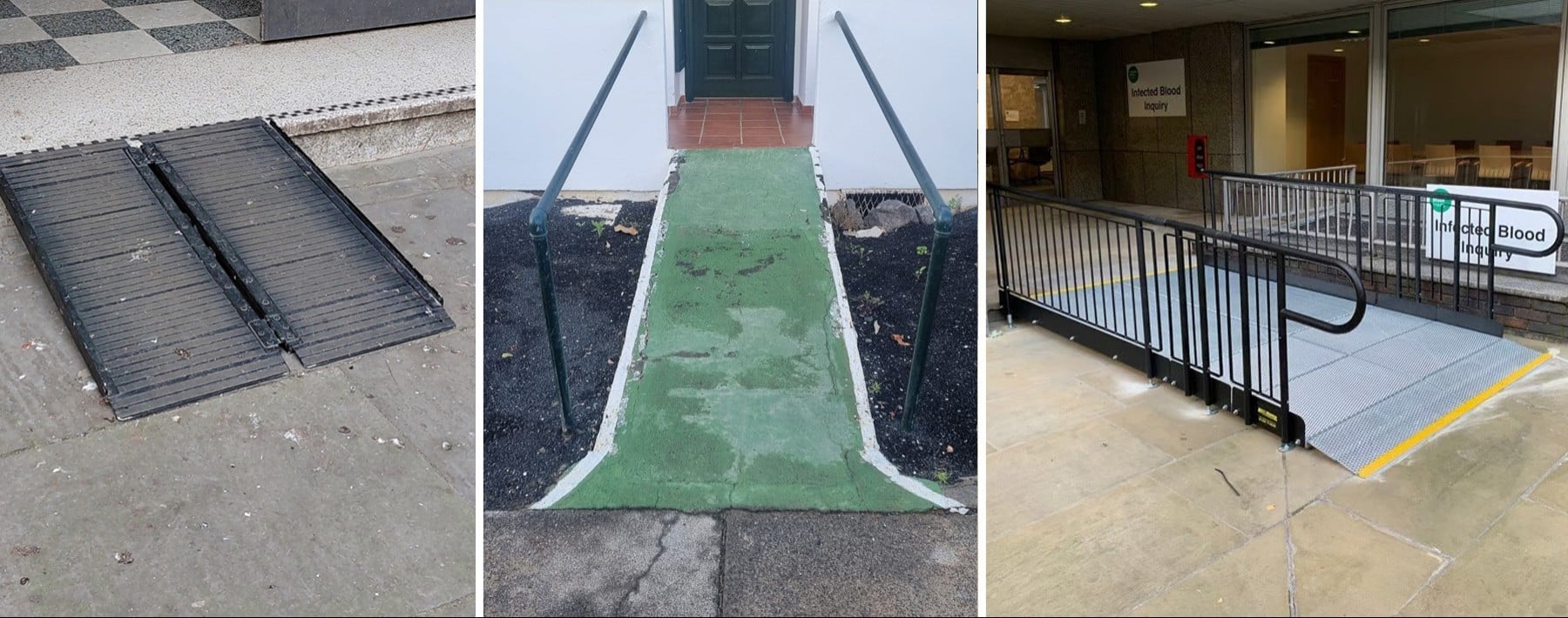
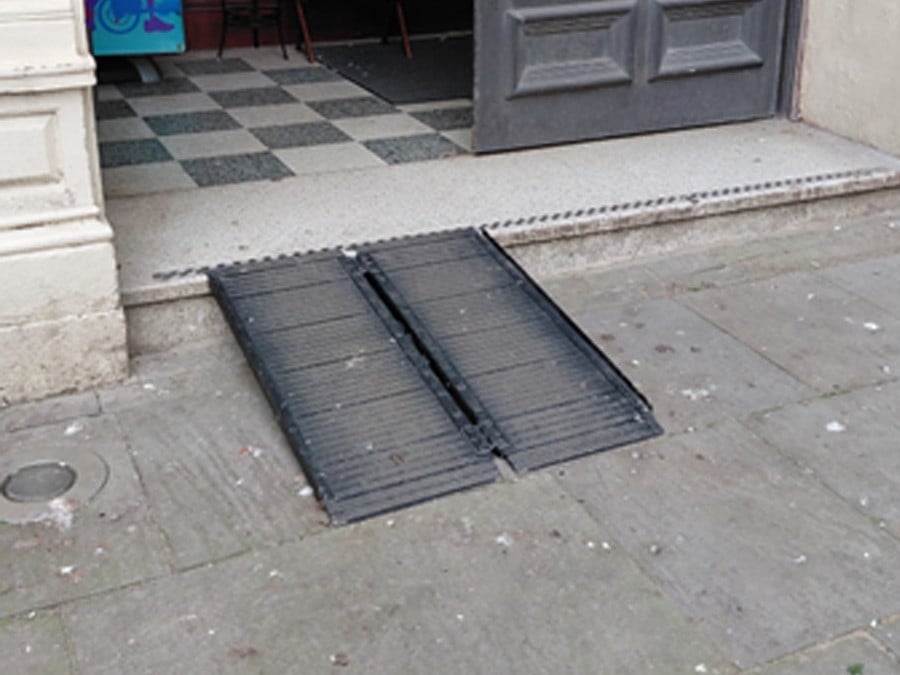
Portable ramps (suitcase ramps) are designed for light, occasional use. They can be useful in temporary situations, but in environments with regular or heavy use — such as public buildings, workplaces, or shared access areas — they may not hold up over time. Repeated use can cause bending, wear, and reduced stability, meaning they often need replacing more frequently than expected.
.jpg)
Wooden ramps are another lower-cost option, but they come with several drawbacks. Timber can rot, warp, or deteriorate when exposed to wet or changing weather conditions. It can also become slippery in poor weather, with moss or algae forming on the surface, which increases the risk of slips and falls. In addition, wood is combustible, meaning it can burn if exposed to fire. These factors often lead to ongoing maintenance and eventual replacement.
.jpg)
DIY ramps may seem like the cheapest solution of all, but they come with serious risks. Poor design or construction can affect safety, durability, and compliance with accessibility standards. For that reason, we would never recommend building a ramp yourself.
While these options may reduce initial costs, they are often less durable and require more frequent maintenance or replacement. In the long run, this can make them more expensive than expected — particularly in high-traffic or demanding environments.
A More Flexible and Cost-Effective Solution: Modular Wheelchair Ramps
.jpg "link")
.jpg "https://www.rapidramp.co.uk/case-studies/lord-derby-academy")
If you’re looking for a solution that works for both short-term and long-term use, modular wheelchair ramps provide a far more reliable and adaptable option.
Our modular ramp systems are manufactured from galvanised steel, offering excellent strength and resistance to corrosion. Key components are powder coated to provide additional protection and durability, helping the system perform well in all weather conditions. The ramp surface is also slip-resistant, supporting safe access in wet or high-use environments.
These systems are designed to accommodate a wide range of users, equipment, and traffic. This includes wheelchair users, mobility scooters, prams, trolleys, luggage trolleys, bicycles, cyclists, and pedestrians. With load capacities of up to one tonne, they are suitable for both residential and commercial settings, as well as public buildings with high footfall.
One of the main advantages of modular ramps is their flexibility. They can be configured to suit different layouts, adjusted if your access needs change, and reused or relocated as required. This makes them ideal for both temporary and permanent installations.
We offer both hire and permanent options, meaning the same system can be used for short-term access requirements or as a long-term solution. If your circumstances change, the ramp can be adapted or removed, without needing to start from scratch.
This flexibility, combined with durability and low maintenance requirements, makes modular ramps a more cost-effective choice over time compared to lower-cost alternatives that may need frequent repair or replacement.
Speak to Our Team
If you’re unsure which option is right for your property or project, we can provide a tailored estimate based on your specific requirements.
Whether you need a temporary ramp or a permanent access solution, we can help you find a system that works now — and continues to work in the future.
Get in touch with our team today to discuss your requirements and explore the most suitable option.
Estimates can be returned within 24hrs if there is clear information given, including project address, drawings, photos and contact details.
References
UK Government – Building Regulations Approved Document M (Access to and Use of Buildings) - https://www.gov.uk/government/publications/access-to-and-use-of-buildings-approved-document-m
UK Government – Building Regulations Approved Document K (Protection from Falling, Collision and Impact)- https://www.gov.uk/government/publications/protection-from-falling-collision-and-impact-approved-document-k
UK Government – Equality Act 2010 Guidance - https://www.gov.uk/guidance/equality-act-2010-guidance
Health and Safety Executive (HSE) – Slips and trips in the workplace - https://www.hse.gov.uk/slips/index.htm
British Standards Institution – BS 8300 (Design of an accessible and inclusive built environment) - https://www.bsigroup.com/en-GB/standards/bs-8300/
Fire safety and timber behaviour (general reference on combustible materials) – UK Fire Service Resources - https://www.fireservice.co.uk/safety/timber-fire-risk/
Timber durability and weathering (rot, moisture, and outdoor degradation) – Forestry and Wood Science resources - https://www.forestresearch.gov.uk/tools-and-resources/fthr/
THE UK’S EXPERTS IN MODULAR RAMP SYSTEMS.
Rapid Ramp
Riverside Works, Church Ln, Etchingham, TN19 7AS
Hours:
8am - 5pm, Monday to Friday
Products
Services
Projects
Sector
Resources
Calculators


